Introduction
This is the third focused article in the expanded Optical Elements section. You can read the previous article, Part 3B – Optical Elements: Polarization, here.
This article is part of the Optical Sensing System Design – Optical Elements series and focuses on prisms that guide and separate light. In optics, separation is a well-defined and necessary process used to measure, analyze, and control physical phenomena. In everyday life, however, separation is rarely this neutral or transparent. One may wish that the only thing being separated were the wavelengths of light.
At this point, optics offers an alternative perspective. Non-dispersive optical elements do not divide light into its spectral components; instead, they redirect it while preserving its content. They demonstrate that it is sometimes possible to obtain new information not by further separation, but by changing the point of view.
Within this context, this work examines prisms and reflectors not only through their technical properties, but also through the distinct optical approaches they represent.
1. What Is a Prism and Where Is It Used?
1.1 What Is a Prism?
An optical prism is an optical element typically made of glass or a similar transparent material, bounded by flat and well-defined surfaces. The primary function of a prism is to modify the direction, spatial position, or orientation of a light beam in a controlled manner. These operations rely on refraction and, more importantly, on the principle of total internal reflection (TIR).
Unlike lenses, prisms do not focus light. Instead, they rearrange the optical path followed by the beam. Non-dispersive prisms are specifically designed to perform this rearrangement without introducing wavelength-dependent separation (chromatic dispersion). As a result, the spectral content of the light remains unchanged, while only its geometric properties—such as direction, displacement, or image orientation—are modified [1][2].
1.2 How Do Prisms Redirect Light Without Spectral Separation?
Chromatic dispersion arises from the wavelength dependence of the refractive index and occurs only when angular refraction takes place. Non-dispersive prisms are designed to suppress angular dispersion by employing three main strategies.
First, the light is arranged to enter and exit prism surfaces at or near normal incidence. In this case, refraction angles are negligible, and wavelength-dependent refractive index variations do not translate into angular separation.
Second, the optical path inside the prism is made symmetric. Even if a small wavelength-dependent deviation occurs at the entrance surface, it is compensated by an equal and opposite deviation at the exit surface. Consequently, all wavelengths emerge along the same direction.
Third, and most commonly, beam redirection is achieved through total internal reflection (TIR). Total internal reflection depends solely on the angle of incidence and does not introduce wavelength-dependent angular deviation. Therefore, the spectral composition of the light is preserved during redirection [1][3].
2. Geometric Transformations in Non-Dispersive Prisms
Non-dispersive prisms provide control over the geometric properties of light without altering its spectral content. This control is achieved through four fundamental transformations: inversion, reversion, displacement, and deviation. These transformations are employed in optical systems to improve image interpretability and to overcome mechanical layout constraints.
2.1 Inversion and Reversion
In an optical system, images formed by lenses are often inverted with respect to both the vertical and horizontal axes. Inversion refers to the flipping of the image upside down relative to the vertical axis, whereas reversion denotes the mirror symmetry of the image along the horizontal axis.
Non-dispersive prisms realize these transformations through total internal reflection. As light propagates inside the prism and undergoes one or more reflections, each reflection alters the spatial orientation of the image. The number of reflections and the geometry of the reflecting surfaces determine along which axes the image is inverted.
These transformations are particularly required in the following applications:
- Binoculars and telescopes: to obtain a natural and correctly oriented image for the observer
- Optical viewfinders and sighting systems: to ensure intuitive image perception
- Imaging optics: to perform optical correction instead of electronic processing
Porro prisms and roof (Amici) prisms perform inversion and reversion simultaneously, enabling compact and mechanically stable optical system designs [1][2].
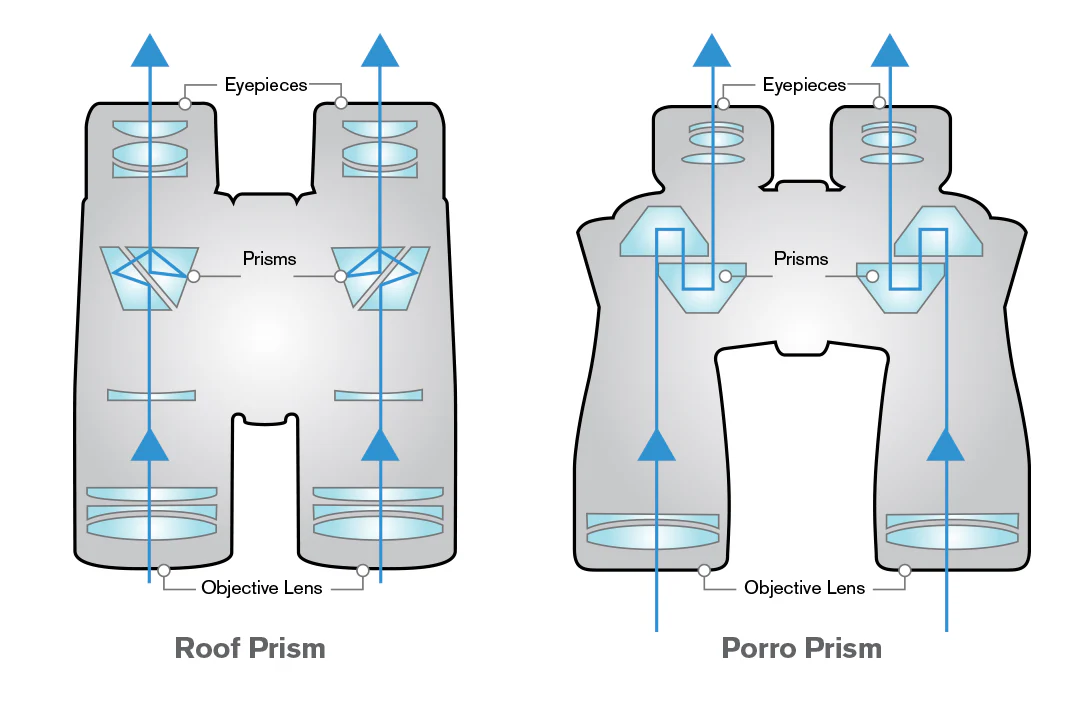
Figure 1 — Source: https://www.cloudynights.com/forums/topic/902390-binoculars-for-watching-planes/
2.2 Displacement and Deviation
Displacement refers to the parallel translation of a light beam in space without changing its propagation direction. In this case, the direction of the beam is preserved while its spatial position is shifted. Displacement provides a critical advantage in systems where a sensor or detector cannot be placed directly on the optical axis.
Deviation, on the other hand, involves changing the propagation direction of the light beam by a defined angle. The most common example is the 90° beam deflection achieved using right-angle prisms. In such prisms, beam redirection is accomplished through total internal reflection rather than refraction, resulting in high mechanical and optical stability.
These two transformations are typically used independently:
- When a beam is deviated, displacement is often negligible.
- When a beam is displaced, its propagation direction is generally preserved.
Typical application areas include:
- Machine vision and industrial optics: optimization of camera–illumination geometry
- Periscope and observation systems: routing the line of sight around physical obstacles
- Optical integration: increasing mechanical design flexibility
2.3 Shared Advantage of Non-Dispersive Prisms
All of these transformations are performed by non-dispersive prisms without introducing chromatic dispersion. While the direction or position of the light beam is modified, its wavelength components are not separated. As a result:
- Color fidelity is preserved
- Measurement accuracy is maintained
- Consistent performance is achieved across broad spectral ranges (UV–VIS–IR)
This property makes non-dispersive prisms indispensable components in both imaging and measurement-based optical systems [1][3].
3. Common Types of Non-Dispersive Prisms
Non-dispersive prisms are specialized optical elements that perform various geometric transformations while preserving the spectral content of light. Each prism type is designed to address a specific transformation requirement or system constraint. This section presents the most commonly used types of non-dispersive prisms.
3.1 Right-Angle Prism
The right-angle prism is one of the simplest and most widely used prism types. Its primary function is to deflect a light beam, typically by 90°. This change in direction is achieved through total internal reflection at the hypotenuse surface of the prism.
In this type of prism, light:
- Enters the prism through the input surface by refraction,
- Undergoes total internal reflection at the hypotenuse surface,
- Exits the prism through the output surface by refraction.
Since the dominant contribution to beam redirection occurs via total internal reflection, no chromatic dispersion is introduced.
Typical application areas include:
- Periscope systems
- Folding optical paths in experimental setups
- Designs where direct mechanical placement of cameras or sensors is not feasible
![Figure 3 Source : [3]](/images/articles/optical-sensing-system-design-optical-elements-prism-part-3-of-5/figure-02.png)
45° - 90° - 45° as a Right Angle Prism Showing Inversion (Left) and Reversion (Right)
3.2 Porro Prism
A Porro prism consists of two right-angle prisms arranged sequentially. This configuration causes the image to undergo two reflections, resulting in both inversion and left–right reversal (reversion) being performed simultaneously.
An important characteristic of Porro prisms is their ability to increase the optical path length without increasing the physical length of the system. This enables the design of imaging systems that are more compact while remaining optically effective.
Typical application areas include:
- Binoculars
- Handheld optical observation devices
- Systems in which intuitive image perception is essential
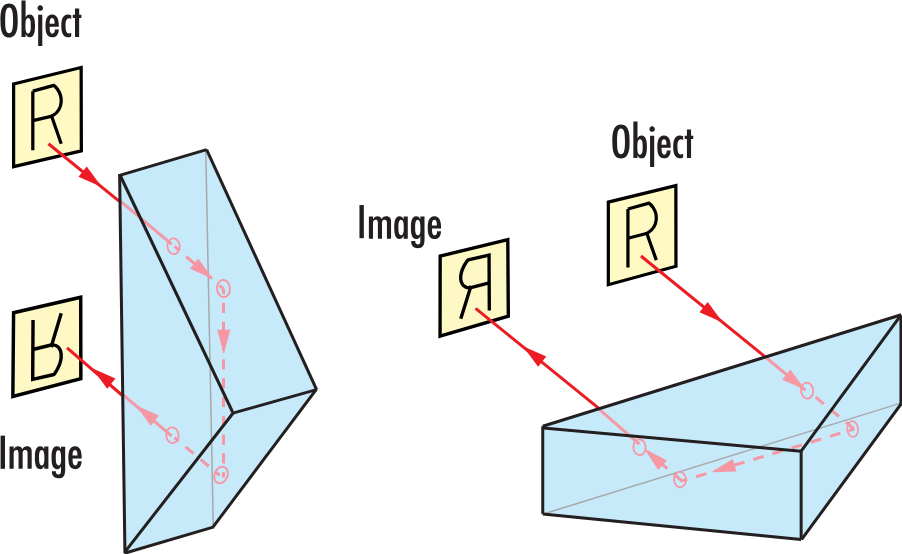
Figure 3 — Source: [3]
Fixed 180° Rotation with a Porro System
3.3 Abbé Prism
Abbé prisms are defined as prisms that perform both image inversion and left–right reversal, while largely preserving the overall propagation direction of the light beam. For this reason, they are classified among direct-vision prisms.
These prisms offer particular advantages in systems where precise alignment is critical, since the input and output beams remain approximately collinear along the same optical axis.
Typical application areas include:
- Precision optical measurement systems
- Laboratory experimental setups
- Optical designs with low alignment tolerance
3.4 Amici (Roof) Prism
The Amici prism, also known as a roof prism, is a type of prism that inverts the image and reverses its left–right orientation due to the roof-shaped geometry on its upper surface. At the same time, it typically deflects the light beam by 90°.
In these prisms, beam redirection is achieved primarily through total internal reflection. However, due to possible phase differences introduced at the roof edge, manufacturing precision becomes critically important in high-resolution optical systems.
Typical application areas include:
- Modern binoculars
- Compact telescope systems
- Imaging applications requiring high directional stability
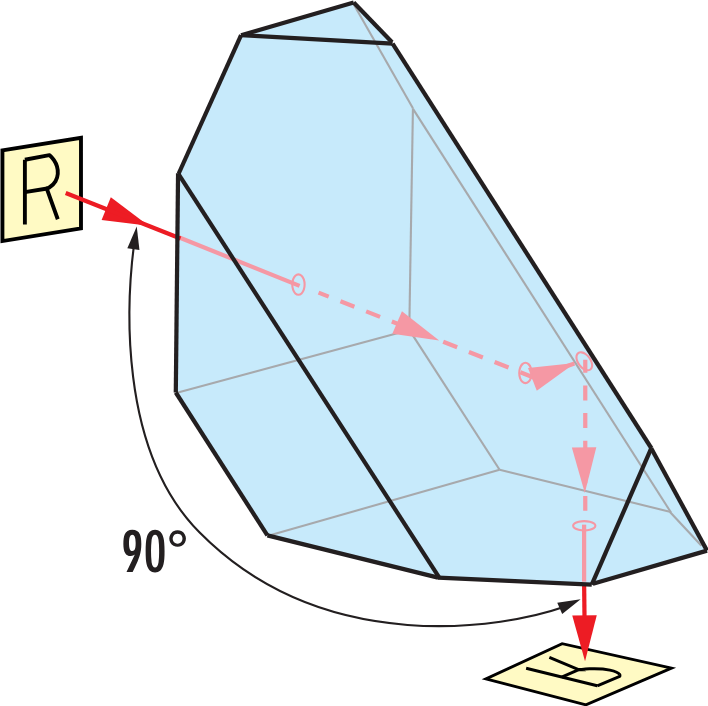
Figure 4 — Source: [2] An Amici roof prism
3.5 Schmidt Prism
Schmidt prisms have specialized geometries that enable them to perform image inversion and left–right reversal while simultaneously deflecting the image by a defined angle. These prisms are particularly preferred in systems where the available mechanical volume is limited.
Typical application areas include:
- Compact image steering systems
- Industrial optical modules
- Special-purpose optical integrations
![Figure 6 Source [2]](/images/articles/optical-sensing-system-design-optical-elements-prism-part-3-of-5/figure-05.png)
Figure 5 Source [2]
Schmidt Prisms - Deviation
4. Dispersive Reflectors (Reflective and Dispersive Optical Elements)
Dispersive reflectors are reflective optical elements that separate light into different directions depending on wavelength. Unlike prisms, this dispersion does not arise from the refractive index of the material, but from periodic microstructures formed on the reflective surface. By directing different wavelengths at different angles, dispersive reflectors enable precise spectral separation. For this reason, they are essential components in spectral analysis, optical measurement, and wavelength-selective optical systems.
4.1 Advantages and Limitations of Dispersive Reflectors
Advantages:
- High spectral resolution
- Operation over a wide spectral bandwidth
- Independence from material refractive index
Limitations:
- Sensitivity to mechanical alignment
- Overlapping diffraction orders
- Sensitivity to surface imperfections
For these reasons, dispersive reflectors are often used in combination with non-dispersive prisms to suppress or control undesired spectral effects.
5. Comparison of Mirrors and Prism-Based Reflectors
In optical systems, mirrors and prism-based reflectors represent two different approaches for beam steering. Mirrors operate through metallic or dielectric reflective coatings, whereas prism-based reflectors redirect light via total internal reflection (TIR) within the prism material. Consequently, prism-based reflectors do not include an external reflective coating that directly interacts with the light.
Mirrors provide flexible solutions due to their broad spectral operation and ease of adjustment. However, reflective coatings may suffer performance degradation over time as a result of oxidation, surface damage, and environmental exposure. This becomes a limitation in long-term and harsh operating conditions.
In prism-based reflectors, beam redirection occurs independently of coatings, allowing optical performance to remain more stable over time. The absence of external reflective layers makes these elements more durable, environmentally robust, and maintenance-free. As a result, prism-based reflectors are particularly advantageous in industrial, portable, and long-term deployment systems.
In summary, mirrors are preferred in systems requiring adjustability and flexibility, whereas prism-based reflectors provide a more suitable solution for optical designs in which long-term stability and durability are prioritized.
Conclusion
This study compared non-dispersive prisms and dispersive reflectors used in optical sensing systems in terms of their geometric and spectral effects on light. While non-dispersive prisms enable beam steering and image transformation without altering spectral content, dispersive reflectors provide wavelength-dependent separation for spectral analysis.
The results show that these approaches are not competing alternatives but complementary design tools. Effective optical system design therefore depends not only on separating light when necessary, but also on knowing when preserving spectral integrity and changing perspective leads to a better solution.
Continue with Part 3D – Optical Elements: Retroreflectors.
References
[1] W. L. Wolfe, Nondispersive Prisms, Handbook of Optics, pp. 160–186.
[2] Edmund Optics, Introduction to Optical Prisms.
[3] Edmund Optics, Optical Prism Application Examples.
[4] Edmund Optics, Schmidt Prisms.
[5] G. J. Zissis, Dispersive Prisms and Gratings, Handbook of Optics, Chapter 5.
[6] E. Hecht, Optics, Addison-Wesley.
7] F. A. Jenkins, H. E. White, Fundamentals of Optics, McGraw-Hill.