1. Introduction
The starting point of this article was actually a rather ordinary problem.
I have been trying to grow lotus plants on my balcony. To do that, I set up a water tank. After a while, the lotus plants began to sprout and develop their leaves. However, as the weather became warmer, a familiar sound appeared: the buzzing of mosquitoes.
Stagnant water is essentially a breeding factory for mosquitoes. Of course, I could have added chlorine or various chemicals to the water, but I did not want to take that approach.
After some time, an interesting idea began to form in my mind. What if it were possible to build small robots that continuously patrol the water, harvesting as much energy as possible from their environment? These robots could constantly scan the water, detect mosquito larvae, and intervene only where necessary by applying localized electrical pulses. They could even communicate with one another and behave like a small swarm, calling for assistance whenever needed.
While these thoughts were buzzing around in my head like mosquitoes themselves, I started searching the internet for inspiration. That is when I came across the electric eel.
At first glance, the most striking feature was its ability to generate electrical discharges of hundreds of volts. However, as I dug deeper, I realized that high voltage was not the most fascinating part. The electric eel does far more than generate electricity. It senses its surroundings, reveals hidden prey, shapes electric fields, and can even manipulate the path through which electrical current flows.
At that point, the question changed.
Rather than asking how an electric eel generates electricity, I became much more interested in understanding how it uses that electricity so effectively.
So, before we begin, I would like to thank all those annoying mosquito buzzes that inspired this unexpected journey of discovery.
2. Where Does the Electricity Come From?
Before we can understand how electric eels use electricity, we first need to understand where that energy comes from. After all, sodium, potassium, and cell membranes are not unique to electric eels. Many living organisms, including humans, rely on the same biological mechanisms. The neurons in our brains, the cells in our hearts, and our muscles all generate electrical signals.
So why can humans produce nerve signals of only a few millivolts, while an electric eel can generate discharges of hundreds of volts?
The answer lies in specialized cells known as electrocytes.
Electrocytes evolved from muscle cells. Over time, however, they largely lost their ability to contract and instead became highly specialized for electrical energy production. In a sense, nature transformed a muscle cell into a biological battery.
The operation of an electrocyte is based on a fundamental mechanism found in virtually all living cells. Sodium–potassium pumps embedded in the cell membrane continuously consume energy to transport ions into and out of the cell. The energy required for this process is supplied by ATP molecules.
For every three sodium ions pumped out of the cell, two potassium ions are transported in. This creates a difference in ion concentration across the cell membrane. In other words, the cell uses chemical energy to store electrical potential energy.
Just as charging a battery stores energy, an electrocyte stores energy by consuming ATP and maintaining this ionic imbalance.
Food → ATP → Ion Gradient → Electricity
This sequence forms the foundation of the electric eel’s entire energy system.
When an electrocyte is at rest, the electrical effects of its two sides balance each other, and no significant voltage can be measured from the outside. However, when a signal arrives from the nervous system, voltage-gated sodium channels located on only one side of the cell open. As a result, the cell generates a potential difference of approximately 150 mV.
For a single cell, this is actually a very small voltage. In fact, it is not dramatically different from the electrical potentials generated by many cells in the human nervous system.
But this raises an important question:
How can a cell that produces only about 150 mV generate electrical discharges of hundreds of volts?
3. From 150 mV to 600 V: How Is It Possible?
Nature uses a remarkably familiar solution here:
Series connection.
Within the main electric organ, thousands of electrocytes are arranged one after another. The voltage generated by each cell is added to that of the next. By connecting approximately 6,000 electrocytes in series, the eel can generate electrical discharges reaching hundreds of volts.
This architecture is not very different from a modern battery pack.
A single lithium-ion cell produces about 3.7 V. In electric vehicles, hundreds of cells are connected in series to achieve pack voltages of several hundred volts. Electric eels rely on exactly the same principle.
However, this capability comes at a significant cost. Approximately 80% of an electric eel’s body is dedicated to organs involved in electricity generation. In other words, most of the animal is not composed of muscle or internal organs, but of highly specialized tissues designed to produce electrical energy.
Moreover, the electrocytes are not arranged as one extremely long series chain. The electric organ contains numerous series-connected stacks of electrocytes. These stacks are then connected in parallel. As a result, the series arrangement generates high voltage, while the parallel structure increases the available current.
From an electrical engineering perspective, the concept is very familiar: series connections increase voltage, whereas parallel connections increase current capacity.
But this is where a far more challenging problem emerges.
The cells in a battery are permanently connected. In an electric eel, however, thousands of biological cells must be activated in a synchronized manner within milliseconds.
And this is where the real engineering challenge begins.
![Figure 1 Electric organ anatomy and electrocyte operation. Adapted from ScienceABC [7].](/images/articles/what-electric-eels-can-teach-us-about-emc-and-robotics/figure-01.png)
Figure 1 Electric organ anatomy and electrocyte operation. Adapted from ScienceABC [7].
4. How Are 6,000 Cells Activated Simultaneously?
The signals that control the electric organ originate in a specialized region located in the rear part of the brain known as the electromotor nucleus. From there, nerve fibers extend throughout the electric organ and connect to the electrocytes.
Because the electric organ occupies a large portion of the eel’s body, the distances between the electromotor nucleus and individual electrocytes vary considerably. As a result, the lengths of the neural pathways are not the same. Research has shown that these differences are partially compensated for by variations in nerve fiber diameter and conduction velocity. Thicker nerve fibers transmit signals more rapidly, while thinner fibers conduct more slowly. This helps synchronize the arrival times of signals reaching electrocytes located at different distances.
The goal is not to activate every cell at exactly the same mathematical instant. Rather, the objective is to achieve a level of synchronization sufficient for the electric organ to operate efficiently.
From an electronics engineering perspective, this is a surprisingly familiar problem. In high-speed digital systems, the performance of a circuit can be affected when a clock signal arrives at different locations at slightly different times. Similarly, in an electric eel, the timing of neural signals plays an important role in determining the characteristics and effectiveness of the electrical discharge.
However, the electricity produced by an electric eel is not used solely for generating high-voltage pulses. The same system also serves as a sophisticated sensing mechanism for detecting and interpreting the surrounding environment.
This naturally leads to the next question:
5. How Do Electric Eels Sense Their Environment Using Electricity?
One of the most fascinating aspects of the electric eel is that it does not use electricity solely for attack or defense. The same electrical system is also used to sense and interpret its surroundings.
This capability relies on the combined operation of two distinct sensing mechanisms: the lateral line system and electroreceptors.
The lateral line system consists of specialized sensory organs distributed along the length of the eel’s body. These organs detect pressure changes, turbulence, and movement within the water. In other words, they allow the eel to perceive the disturbances created by nearby organisms.
Electroreceptors, on the other hand, detect changes in electric fields directly. When an electric eel emits low-voltage pulses, it creates a weak electric field around its body. Objects within the environment distort this field in different ways depending on their conductivity, shape, and size. By detecting these distortions, the electroreceptors enable the eel to construct a form of electrical image of its surroundings.
For this reason, the system is often compared to radar or sonar, although the analogy is not entirely accurate. Radar relies on reflected electromagnetic waves, while sonar uses sound waves. The electric eel employs a different strategy: it measures disturbances in an electric field that it generates itself. This approach is particularly advantageous in murky waters where visibility is severely limited.
However, the system does not merely observe the environment passively.
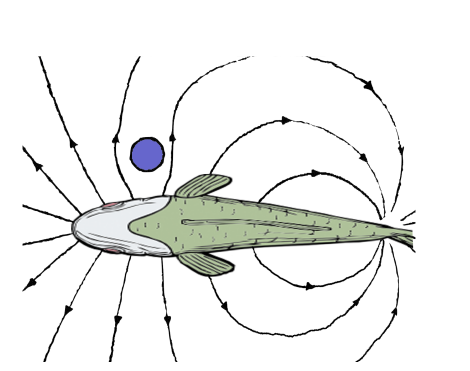 Figure 2 EConductive objects disturb the electric field, enabling underwater detection and localization.[6].
6. How Does an Electric Eel Turn an Electric Field into a Weapon?
Research conducted by Kenneth Catania has shown that electric eels actively “ask questions” of their environment when necessary. During hunting, they do not always launch an immediate attack. Instead, they sometimes emit short high-voltage pulse sequences known in the literature as doublets and triplets—brief bursts consisting of two or three electrical pulses.
The purpose of these discharges is not to kill the prey, but to force hidden animals to reveal themselves. These short electrical pulses activate the prey’s motor neurons, causing involuntary muscle contractions. If a concealed animal is nearby, even a small twitch can be detected by the eel’s lateral line system, allowing it to identify the target and launch a full-power attack within milliseconds.
In other words, the sequence can be summarized as:
Search → Stimulate → Detect Movement → Attack
Once a full-power attack begins, the electric eel generates high-voltage pulses at frequencies of approximately 400–500 Hz. In large individuals, the discharge voltage can reach 600 V, while the instantaneous current may approach 1 A.
However, the effectiveness of the attack is not due to high voltage alone. Research has shown that these discharges do not primarily stimulate the prey’s muscles directly. Instead, they activate the prey’s motor neurons, effectively taking control of its nervous system.
A single pulse produces a brief muscle contraction. When these pulses are repeated at high frequency, the muscles are unable to relax between contractions. The result is a phenomenon known as tetanic contraction, in which the prey loses voluntary control of its muscles and becomes immobilized.
For this reason, electric eels often do not kill their prey outright. Instead, they first disable the prey by overwhelming its nervous system, causing a loss of motor control, and only then proceed to swallow it.
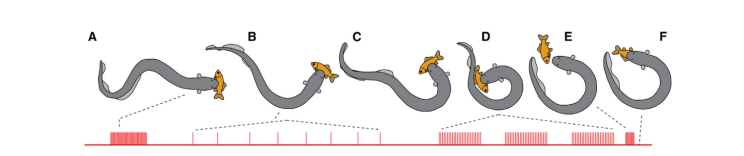
Figure 3. Typical dipole attack sequence of an electric eel. During prey capture, the eel curls its body to bring its head and tail closer together, increasing the electric field experienced by the prey and improving the effectiveness of the discharg [2]
7. How Does It Amplify Its Electric Field?
In some situations, an electric eel increases the effectiveness of its attack by curling its body around its prey. Because the head region acts as a positive pole and the tail region as a negative pole, the prey becomes positioned between these two poles, where it experiences a significantly stronger electric field.
Importantly, this behavior does not increase the amount of energy generated. Instead, it concentrates the existing electric field into a smaller volume, increasing its intensity around the target.
Experiments conducted by Kenneth Catania have shown that this behavior can approximately double the electrical effect experienced by the prey.
![Figure 4. Electric field concentration during curling behavior. Bringing the positive and negative poles closer together increases the electric field intensity around the prey. Adapted from Catania (2015) [2].](/images/articles/what-electric-eels-can-teach-us-about-emc-and-robotics/figure-04.png)
Figure 4. Electric field concentration during curling behavior. Bringing the positive and negative poles closer together increases the electric field intensity around the prey. Adapted from Catania (2015) [2].
8. Strengthening the Attack by Controlling the Current Path
This is not the only strategy employed by the electric eel. When threatened or confronted with a large target, the eel has been observed rising out of the water and making direct contact with its opponent.
Equivalent circuit analyses conducted by Kenneth Catania suggest that this behavior alters the path taken by the discharge current. As the eel rises above the water surface, the resistance of alternative current paths through the surrounding water increases, forcing a larger portion of the current to flow through the target.
From an electrical engineering perspective, this situation can be compared to a voltage divider network. The eel does not generate more energy; instead, it redirects a greater fraction of the available energy toward the target.
In other words, the effectiveness of the attack is determined not only by the voltage generated, but also by the eel’s ability to behaviorally control the path through which the current flows.
This strategy is perhaps more analogous to managing a return path in EMC design than to simply using a larger power source.
The equivalent circuit model shown in Figure 5 illustrates how the eel reduces the number of parallel current paths through the water as it rises, thereby forcing a greater portion of the discharge current through the target. In other words, the electric eel not only shapes the electric field—it actively controls the path of the current itself.
![Figure 5. Equivalent circuit representation of the electric eel's leaping attack. Direct contact with the target redirects a larger fraction of the discharge current through the target. Adapted from Catania [8]](/images/articles/what-electric-eels-can-teach-us-about-emc-and-robotics/figure-05.png)
Figure 5. Equivalent circuit representation of the electric eel’s leaping attack. Direct contact with the target redirects a larger fraction of the discharge current through the target. Adapted from Catania [8]
9. Why Doesn’t the Electric Eel Shock Itself?
“If an electric eel can generate 600 volts, why isn’t it affected by its own discharge?”
The answer lies in a fundamental principle of electricity: voltage alone is not what determines biological effects. The path taken by the current is equally important.
In humans, electrical shocks become particularly dangerous when current passes through the chest and affects the heart. The electrical system responsible for maintaining the heart’s rhythm is highly sensitive, and external currents at certain frequencies can cause arrhythmias or even ventricular fibrillation.
In electric eels, however, the situation is quite different. While the electric organs occupy roughly 80% of the body, the heart and brain are confined to a relatively small region near the head. As a result, most of the generated energy is directed outward into the surrounding water rather than through the eel’s own body.
Water also provides a much more favorable current path than the eel’s internal tissues. Consequently, most of the electric field closes through the surrounding environment, and a significant portion of the discharge current flows through the water. In other words, the system is designed not only to generate electricity but also to control where the current flows.
Another interesting aspect is the way the electric organ operates. Although external measurements may reveal discharges of hundreds of volts, this voltage does not appear across a single cell. A discharge of approximately 600 V is produced by connecting thousands of electrocytes in series, each generating only about 150 mV. As a result, no individual cell is exposed to hundreds of volts.
Researchers also believe that electric fish have evolved specialized adaptations within their nervous and muscular systems that provide protection against their own electrical discharges. However, many of these mechanisms are still not fully understood.
In other words, there are still questions that science continues to investigate today.
What we do know with certainty, however, is this:
The remarkable success of the electric eel does not lie solely in its ability to generate high voltage. Its true achievement is the ability to use that energy in the right place, at the right time, and in the right direction.
10. Do Electric Eels Cooperate?
The idea of a swarm of robots—capable of communicating with one another and converging on the same target when necessary—was one of the motivations behind this article. Naturally, I began to wonder whether a similar system already exists in nature.
My initial assumption was that electric eels could not be entirely solitary creatures. Although they are not generally considered social animals, they must somehow interact with one another for mate selection, reproduction, and various environmental interactions.
As I explored the scientific literature, I came across some fascinating findings. For many years, electric eels were believed to be strictly solitary predators. However, observations published in 2021 revealed that, under certain conditions, dozens of electric eels may gather together, herd schools of small fish, and carry out coordinated attacks.
That said, scientists still do not fully agree on how organized this behavior truly is. Is it a genuine form of cooperation, or simply a temporary aggregation of individuals exploiting the same hunting opportunity? The answer remains unclear.
An even more intriguing question is this:
If an electric eel is largely unaffected by its own high-voltage discharges, how do nearby electric eels tolerate the powerful electric fields generated by one another?
This question has not yet been fully answered. However, researchers have shown that electric fish can detect electric fields, that their nervous systems are adapted to these signals, and that some species can filter out electrical “noise” from their environment. The ability of multiple individuals to distinguish between different electrical signals is reminiscent of the interference suppression and signal separation techniques used in modern communication systems.
Another fascinating topic is the interaction of overlapping electric fields. The effects of multiple electric eels discharging simultaneously in the same area have not yet been thoroughly investigated. In theory, several electric fields concentrated in the same region could increase the local field intensity. However, the extent of this effect and its contribution to hunting success remain active areas of research.
Perhaps some of the questions we are trying to answer today while developing swarm robotics and distributed sensing systems have already been explored for millions of years by these extraordinary animals inhabiting the rivers of the Amazon.
A video demonstrating this collective hunting behavior can be viewed below:
https://www.youtube.com/watch?v=vsQYI5Ajwp4
Reference: Bastos DA et al. Social Predation in Electric Eels. Ecology and Evolution, 2021.
11. Conclusion
When I started this article, my goal was simply to find a solution to the mosquito problem in my lotus tank. However, the research led me far beyond what I had expected. What began with a few mosquito larvae evolved into a journey through ion channels, electrocytes, 600-volt discharges, electroreceptors, active sensing systems, and even collective behavior.
The more I learned about electric eels, the more fascinated I became. We are talking about a highly sophisticated biological system capable of generating and storing its own electricity, sensing its environment, locating targets, shaping electric fields, and even controlling the path through which current flows.
Along the way, many ideas came to mind. Unfortunately, I do not currently have the laboratory resources or funding required to explore them further.
So, for now, I have settled on a more practical solution.
Instead of building a swarm of electric-eel-inspired robots for my lotus tank, I will probably introduce a few goldfish that enjoy feeding on mosquito larvae. Of course, I should first give my lotus plants a little more time to grow. 🙂
I must admit that I became so intrigued by electric eels that I briefly considered keeping one as a pet. On second thought, they do not seem particularly well suited to domestic life. For now, goldfish appear to be the safer option.
That said, I still find myself thinking about projects inspired by electric eels. If this article has sparked new ideas for you, I hope it encourages further exploration of bio-inspired sensing systems, robotics, and intelligent electrical technologies.
Who knows…
Perhaps some of tomorrow’s innovations will not begin in a laboratory, but with the faint buzz of a few mosquitoes circling a lotus tank on a balcony
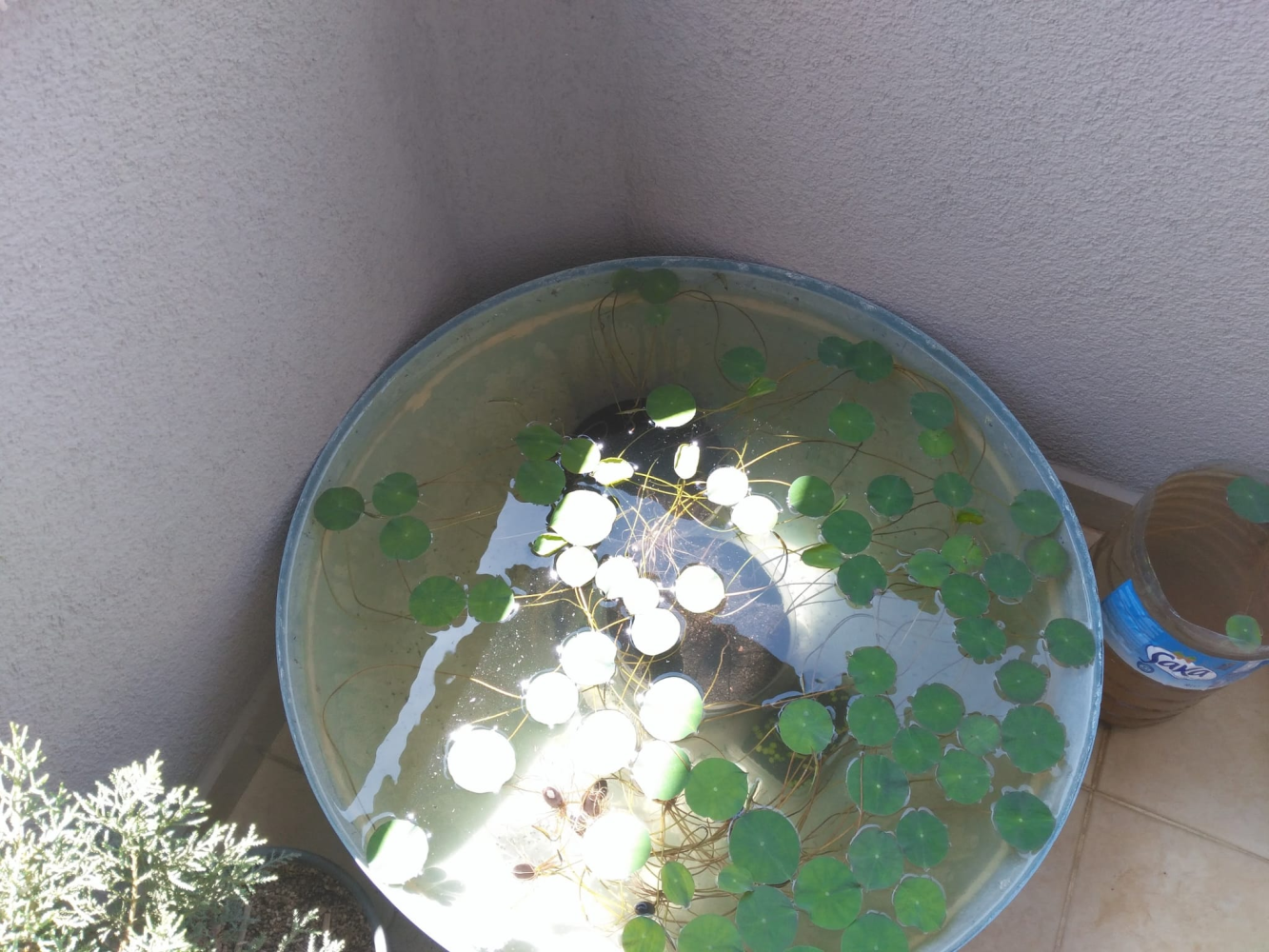
Figure 6. My modest lotus tank—or, as the mosquitoes would call it, a luxury maternity ward.
References
[1] Catania, K.C. (2014). The Shocking Predatory Strike of the Electric Eel. Science, 346(6214), 1231–1234.
[2] Catania, K.C. (2015). Electric Eels Concentrate Their Electric Field to Induce Involuntary Fatigue in Struggling Prey. Current Biology, 25(22), 2889–2898. https://doi.org/10.1016/j.cub.2015.09.036
[3] Catania, K.C. (2019). The Astonishing Behavior of Electric Eels. Brain, Behavior and Evolution, 93(2–3), 80–198. https://doi.org/10.1159/000499527
[4] Bastos, D.A., Miranda-Chumacero, G., et al. (2021). Social Predation in Electric Eels. Ecology and Evolution.
[5] Gallant, J.R., Traeger, L.L., Volkening, J.D., et al. (2014). Genomic Basis for the Convergent Evolution of Electric Organs. Science, 344(6191), 1522–1525.
[6] Friedman, J., Torres, D., & Srivastava, M.B. (2018). Submerged Biomimetic Electrostatic Imaging in Salt Water. University of California, Los Angeles (UCLA).
[7] ScienceABC. How Do Electric Fish Produce Electricity? Retrieved from: https://www.scienceabc.com/nature/animals/how-do-electric-fish-produce-electricity/
[8] Catania, K.C. (2019). Electric Eel Leaping Attacks and Current Path Manipulation. Retrieved from: https://pmc.ncbi.nlm.nih.gov/articles/PMC6646469/
[9] Video Demonstration – Electric Eel Social Predation. Retrieved from: https://www.youtube.com/watch?v=vsQYI5Ajwp4
[10] Video Demonstration – Electric Eel Behavior. Retrieved from: https://www.youtube.com/watch?v=z0M7_HPSi14